The Xbox 360 video game console, developed by Microsoft, features several first- and third-party accessories.
Game controllers/gamepads
Xbox 360 controller
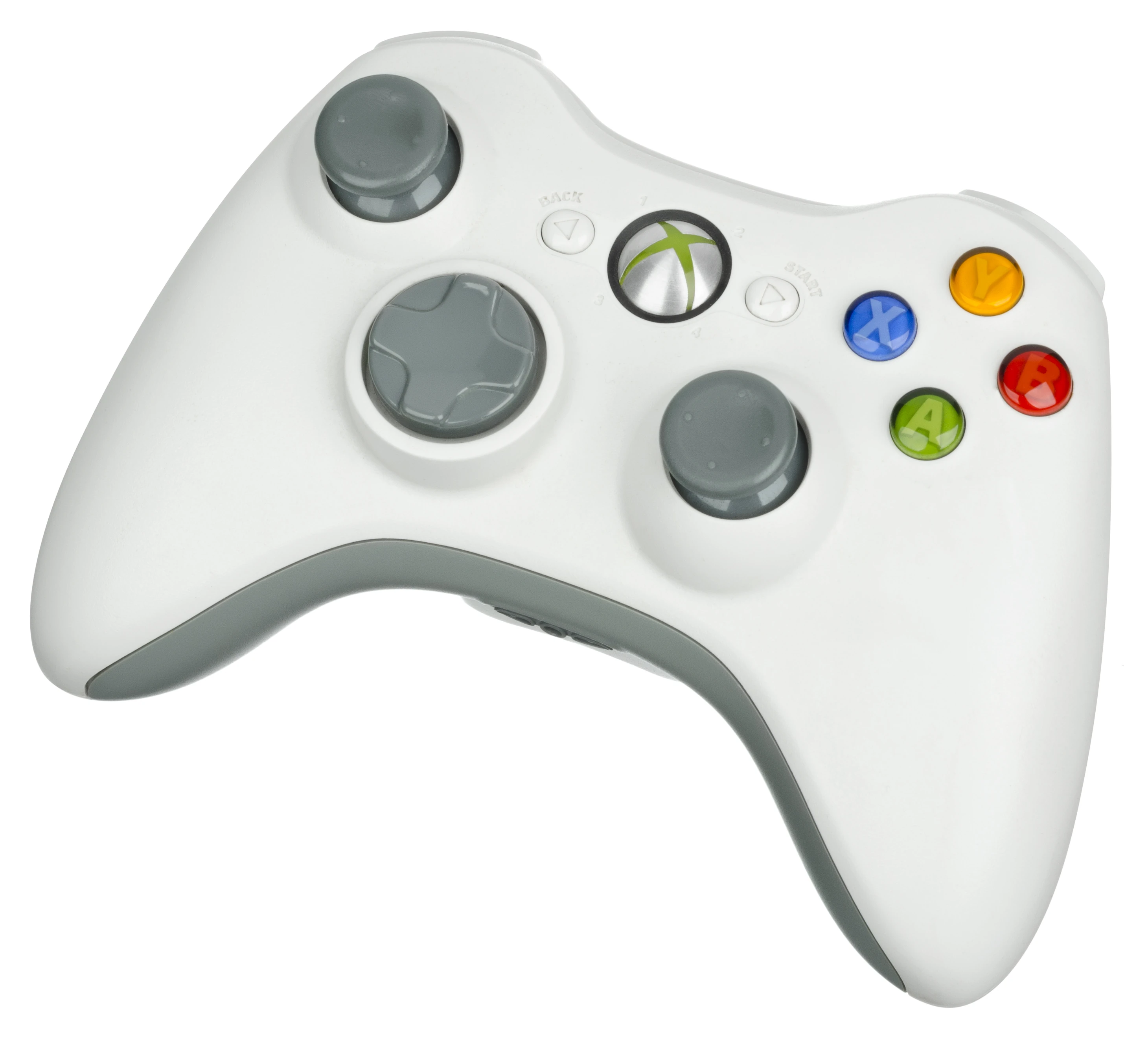

Up to four controllers can connect to the Xbox 360, including wired and wireless gamepads. The wireless controllers run on either AA batteries (Alkaline or rechargeable) or on a rechargeable battery pack. The wired controllers can be connected to any of the USB ports on the console (the number of ports depends on model: old-style 360s have two at the front and one on the rear, while Xbox 360 S units have two at the front and three at the rear), or to a USB hub. USB keyboards are also supported, but only for inputting text and navigating the dashboard; additionally, the number pad and hotkeys are non-functional. The original first-generation Xbox controllers are not compatible with the Xbox 360. The controller is also compatible with PCs, though wireless controllers will need the Wireless Gaming Receiver. The Xbox 360 controller has been used in the United States and British militaries. The Xbox 360 controller has vibration feedback, which is limited to titles using the new XInput API; however, unlike the first Xbox, the face buttons are not analog.
Wireless Gaming Receiver
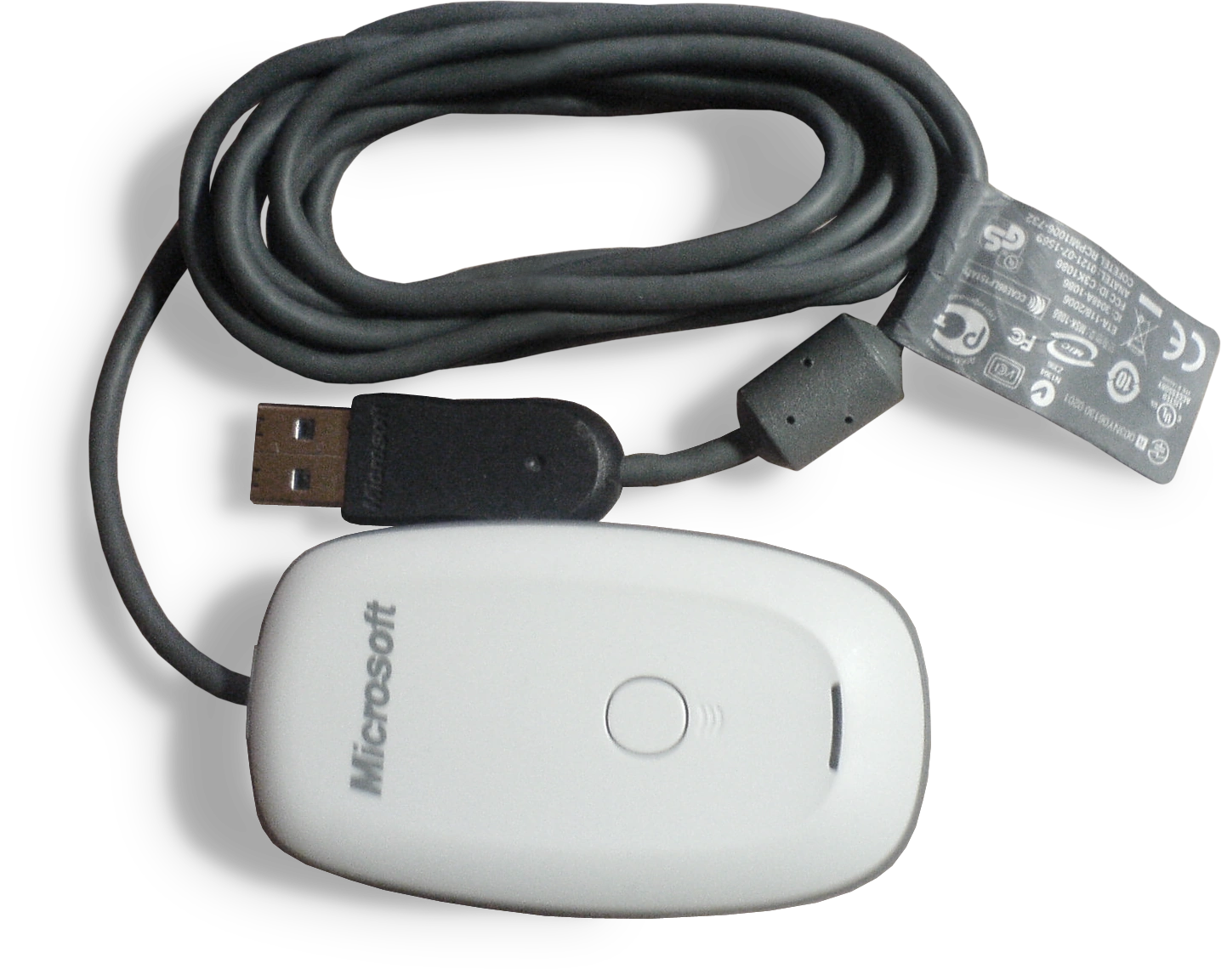

Because Xbox 360 wireless accessories communicate over a proprietary 2.4 GHz protocol (as opposed to the wireless controllers for the PlayStation 3 and Wii using Bluetooth), Microsoft released the Wireless Gaming Receiver, which allows wireless Xbox 360 accessories to be used on a Windows-based PC. The adapter was first unveiled at E3 2006 and released on February 16, 2007. Most Xbox 360 wireless accessories are supported, including standard controllers, racing wheels (without force-feedback), headsets, and guitar controllers.
The device acts similarly to an Xbox 360, allowing up to four controllers and four headsets at a time to be connected to the receiver. The device has a 30-foot (10-meter) range and a six-foot (2-meter) USB cable. It is specifically designed to work with games bearing the "Games for Windows" logo, but will function with most games that permit a standard PC gamepad. The official Xbox website noted that the adapter will work with "all future wireless devices". However, it is worth noting that the racing wheel does not currently have force feedback support.
Controller accessories
Rechargeable Battery Pack
The Rechargeable Battery Pack for the Xbox 360 controller contains two AA nickel metal hydride (NiMH) batteries inside a sealed casing, with a custom connector on the rear to allow charging through the Xbox 360 controller itself. The pack provides up to 25 hours of continuous gaming for the wireless controller. It is recommended in place of disposable AA batteries, due to the replacement cost (in both economic and environmental terms). It also ships as part of both the Play & Charge Kit and the Quick Charge Kit. An upgraded version of the Rechargeable Battery Pack, which provides up to 35 hours of gameplay if using the Play & Charge Kit or 40 hours of gameplay if using the Quick Charge Kit, is included with "transforming d-pad" wireless controllers.
To fully charge a battery pack takes approximately two hours with the Quick Charge Kit; the Play & Charge Kit takes longer (and depends on whether the controller is being used).
Third-party rechargeable battery pack kits are also available. Although the official rechargeable battery pack is NiMH, the normal (AA) battery casing states "Use only Alkaline battery type AA (LR6)".
Play & Charge Kit
The Play & Charge Kit contains a rechargeable battery pack and a USB charging cable. Using the charging cable does not affect the controller's functionality and can be used without interruption to gameplay. The Play & Charge cable also allows use of a wireless controller without a battery pack. When doing so, Microsoft recommends using an AA pack (empty) to avoid damage to the exposed battery compartment. When connected, the controller does not act as a wired controller, but continues to communicate with the console or receiver wirelessly; data is sent via USB to the host only to allow automatic syncing and to initiate charging, and does not send controller input data. As a result, the cable does not need to be plugged into the console or computer the controller is being used with – any convenient powered USB port may be used. The Play & Charge Kit will also automatically sync the controller to a Wireless Gaming Receiver when both are plugged into a Windows computer.
The original Play & Charge Kit contains 2100 mAh AA (LR6) NiMH cells. Such cells are readily available in four packs up to 3000 mAh, with 2000-2600 mAh batteries being common.
Alongside the release of the Xbox 360 S in June 2010, Microsoft started shipping a "transforming d-pad controller" with an improved Play & Charge Kit and an upgraded rechargeable battery pack. The original Play & Charge Kit provided up to 25 hours of play; the improved Play & Charge Kit provided up to 35 hours of play.
Quick Charge Kit
The Quick Charge Kit is a compact base station that charges up to two rechargeable battery packs and does so in less time than the Play and Charge Kit. It comes with a dual-charger and one rechargeable battery pack. It takes two hours for each of the 2 rechargeable battery packs to be fully charged. A light on the unit is used to indicate status, showing green when it is finished charging/fully charged and red when charging is in progress.
Alongside the release of the Xbox 360 S in June 2010, Microsoft started shipping an improved Quick Charge Kit with an upgraded rechargeable battery pack. Whereas the original Quick Charge Kit gave up to 25 hours of play to the original battery pack, the improved Quick Charge Kit gave up to 40 hours of play to the upgraded rechargeable battery packs.
Messenger Kit
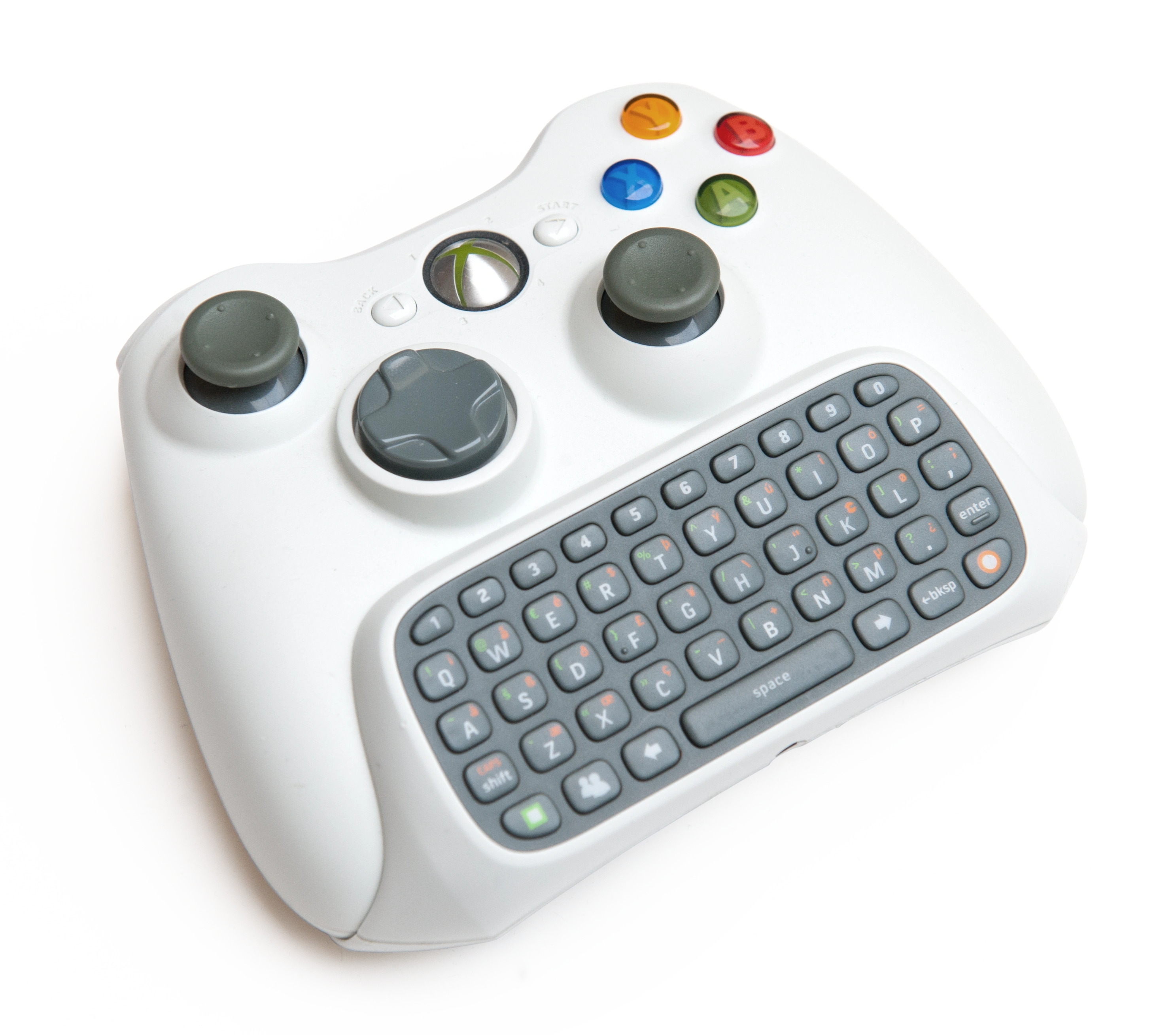

Xbox 360 chatpad from the Messenger Kit attached to a wireless controller.
On September 4, 2007, to coincide with the launch of Xbox Live Windows Live Messenger on the Xbox 360, Microsoft released a small keyboard accessory called the "Chatpad". It was part of the Xbox 360 Messenger Kit, which also included a wired headset. This is partly because older Xbox 360 wired headsets cannot connect to the Chatpad due to the side pins. The Chatpad connects to the controller via two power pins and a UART interface located on the front of the controller (wireless or wired), as well as the 2.5 mm jack for headset compatibility.
Although the Chatpad can be used to communicate with people who are on Xbox Live and Windows-based PCs via Windows Live Messenger, Microsoft does not currently provide drivers to make the Chatpad itself work with a PC. There has been no official word on when, if ever, a driver will be released. However, there have been some attempts at a workaround.
Universal Media Remote
There are two official versions of the Xbox 360 Universal Media Remote, as well as several unofficial ones. The first official media remote is the shorter version of the Universal Media Remote that can be bought at retail, and was supplied with the Xbox 306 Pro. These were sold in limited quantities.
The second official media remote is longer and includes number keys. It was sold in retailers as a standalone product. All remotes can assist in playing DVD movies and music (although the console can play such media without the remote), while the Universal Media Remote offers more functionality by having the ability to serve as a control for a number of TVs of Windows Media Center-based PCs. All remotes allow basic control of games, along with being able to navigate the dashboard. The remote allows for controlling portions of the Xbox 360 interface via infrared.
Media Remote
In late 2011, Microsoft replaced the Universal Media Remote with a redesigned model called the 'Xbox 360 Media Remote. The new remote is glossy black rather than matte white, and is designed to more closely resemble Xbox 360 S consoles. The Media Remote is also capable of controlling the power and volume of various TV sets.
Xbox 360 Wireless Racing Wheel
The Xbox 360 Wireless Racing Wheel was introduced by Microsoft at E3 2006. Released in November 2006, the force feedback steering wheel controller includes the standard gamepad and floor-mounted accelerator and brake pedals. Although the wheel is capable of running off the rechargeable battery pack, the use of the force feedback and active resistance features requires an external AC adapter.
A limited edition of the force feedback wheel included the racing game Project Gotham Racing 3. There is also a "Hardcore Pack" for Test Drive Unlimited, which makes the driving more realistic.
On August 22, 2007, Microsoft published a press release on Xbox.com saying that they would retrofit all the Wireless Racing Wheels for free that were manufactured from 2006 to 2007. This was due to a component in the wheel chassis that, in rare cases, may overheat and fail when the AC adapter is used to power the wheel. Users had to ship their wheel back to Microsoft for repair or replacement.
When the price of this accessory was dropped to $99, it was discontinued in November 2007.
Xbox 360 Wireless Speed Wheel
The Xbox 360 Wireless Speed Wheel was released by Microsoft on September 26, 2011.
It is the successor to the Xbox 360 Wireless Racing Wheel and features a directional pad, the four colored action buttons, and two triggers, also found on the standard Xbox 360 controller. In addition, it features an accelerometer for sensing rotation. It is not capable of registering motion in three dimensions.
Big Buttton Pad
Xbox 360 Arcade GameStick
Rhythm game controllers
Xbox 360 Wireless Microphone
Ace Combat 6 Flight Stick
Kinect
- Main article: Kinect

Kinect (codenamed "Project Natal") is a "controller-free gaming and entertainment experience" produced by Microsoft for the Xbox 360. Based on an add-on peripheral for the console, it enables users to control and interact with the Xbox 360 without the need to touch a game controller for most of the menus and gameplay through a natural user interface using gestures, spoken commands, or presented objects and images. The project is aimed at broadening the Xbox 360's audience beyond its typical gamer base. It was first released on November 4, 2010, in North America, with other regions following later that month.
Nyko has released a "Zoom" attachment for the Kinect camera that allows people to use the system without having large open spaces in their living rooms.
Other
uDraw GameTablet
The uDraw GameTablet is a graphics tablet designed for use with various games. It was produced by THQ and released for the Xbox 360 on November 15, 2011. It was a commercial failure and was discontinued in February 2012; THQ would eventually file for bankruptcy the following year.
Tony Hawk Shred Board
A wireless skating board for Tony Hawk: Shred (and Ride) games. It replaces the previous Tony Hawk Ride Board, also by Activision. The Ride Board is not forward compatible with Tony Hawk: Shred.
Audio/visual accessories
HD DVD Player
The Xbox 360 HD DVD Player is a discontinued accessory that allowed playback of HD DVDs. It was announced by Bill Gates during his 2006 keynote speech at CES. It was officially presented at E3 2006 and was launched on November 7, 2006.
The drive used a USB to connect to the Xbox 360, which processed and output the audio and video. The HD DVD player also featured two extra USB ports on the rear, a Universal Media Remote, as well as a clip for attaching the wireless network adapter. The drive cannot be used to play Xbox or Xbox 360 game titles, and all Xbox 360 games continue to use DVD-9 media.
Headsets
Wired Headset
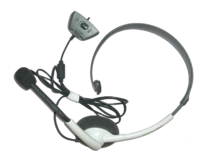

Wired headset (version 1, white)
The headset allows players to use in-game voice chat, private chat, party chat, voice for video chat, and in-game voice recognition in games such as Tom Clancy's EndWar. The headset can also be used with a PC but requires a controller to do so. It features an in-line volume control and a mute switch. There are two versions of the headset, which feature differently shaped connectors. This was to allow compatibility with the chatpad keyboard accessory (original version will not fit on the chatpad). The foam elements on the headset are prone to fading over time. A dark grey headset would soon turn into a light grey one. A wired headset is bundled with every console other than Core/Arcade models, as well as with the messenger kit and the Xbox Live Starter Pack. In addition to the first-party headset, Plantronics produces a range of officially licensed wired headsets for the Xbox 360. Additionally, many standard mobile phone hands-free kits that feature 2.5 mm connectors will also function as headsets, although this is not officially supported. Similarly, the Xbox headset can be used in many devices that support 2.5 mm headsets.
Live Vision camera
- Main article: Xbox Live Vision
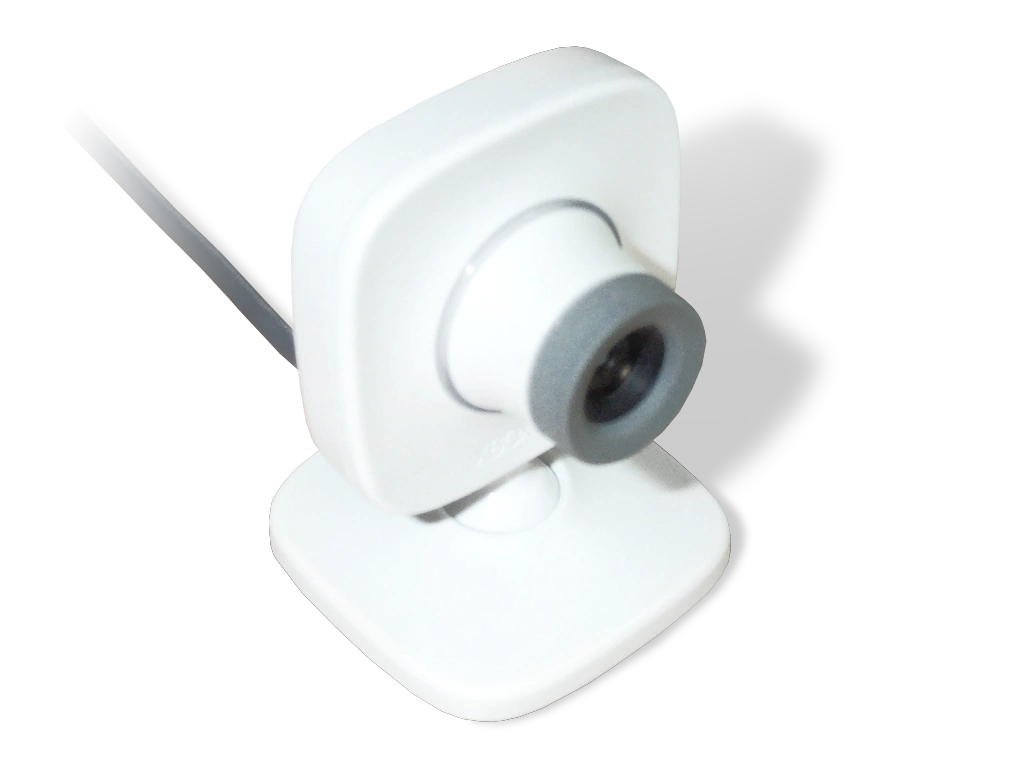

The Xbox Live Vision camera was announced at E3 2006 and was released in North America on September 19, 2006, and Europe and Asia on October 2, 2006 (November 2, 2006, in Japan). Many games have camera functionality included, some of which include: Uno, TotemBall, Burnout Paradise (only during online play, when you are taken down and the camera sends a picture of you at the moment of being taken down), Texas Hold'em, Spyglass Board Games, Pinball FX, Hardwood Backgammon, Hardwood Hearts, and Hardwood Spades. The ability to create an in-game representation of a player (i.e., avatars) was possible using the camera and a suitable game, similar to Sony's EyeToy for the PlayStation 2 and PlayStation Eye for the PlayStation 3. The retail games Ton Clancy's Rainbow Six: Vegas and Vegas 2 allowed players to create an in-game version of their face with this feature. The dashboard software, released on June 13, 2006, added an option in the system tab to support its functions.
Storage
Detachable hard drives
Memory units
Small, portable, flash-based memory devices allow the transfer of saved games, unique gamer profiles, and content downloaded from Xbox Live Marketplace to other Xbox 360 consoles. They were discontinued upon the release of the redesigned Xbox 360 S, which did not have memory card slots. Sizes available were:
- 64 MB memory card
- 256 MB memory card (supplied only with Xbox 360 Arcade models before December 2008)
- 512 MB memory card (was pre-loaded with the Xbox Live Arcade game Geometry Wars: Retro Evolved for a limited time. Later units were pre-loaded with the Xbox Live Arcade game Worms. Still later, units came with a keychain carry case.)
Some game saves and downloaded content cannot be copied from hard drives to memory cards. What content cannot be moved is up to the discretion of the individual video game developers.
USB storage devices
External links
- List of Xbox 360 accessories at Wikipedia