 | This article is outdated. |


Microsoft Windows was announced by Bill Gates on November 10, 1983, two years before it was first released. Microsoft introduced Windows as a graphical user interface for MS-DOS, which had been introduced two years earlier, on August 12, 1981. The product line evolved in the 1990s from an operating environment into a fully complete, modern operating system over two lines of development, each with its own separate codebase.
The first versions of Windows (1.0 through 2.0) were graphical shells that ran from MS-DOS. The Windows 3x series, in its 386 Enhanced Mode, used MS-DOS as a bootloader and displaced it as a virtual machine monitor. Windows 95 introduced multiple features that have been part of the product ever since, including the Start menu, the taskbar, and Windows Explorer (renamed File Explorer in Windows 8). In 1997, Microsoft released Internet Explorer 4, which included the (at the time controversial) Windows Desktop Update. It aimed to integrate Internet Explorer and the web into the user interface, and also brought new features into Windows, such as the ability to display JPEG images as the desktop wallpaper and single window navigation in Windows Explorer. The inclusion of Internet Explorer 4 and the Desktop Update led to an antitrust case in the United States. Windows 98 included USB support out of the box, as well as plug and play, which allows devices to work when plugged in without requiring a system reboot or manual configuration. Windows Me, the last DOS-based version of Windows, was aimed at consumers and released in 2000. It introduced System Restore, Help and Support Center, updated versions of the Disk Defragmenter and other system tools.
In 1993, Microsoft released Windows NT 3.1, the first version of the newly developed Windows NT operating system, followed by Windows NT 3.5 in 1994, and Windows NT 3.51 in 1995. "NT" is an initialism for "New Technology". Unlike the Windows 9x series of operating systems, it was a fully 32-bit operating system. NT 3.1 introduced NTFS, a file system designed to replace the older File Allocation Table (FAT), which DOS and the DOS-based Windows operating systems used. In 1996, Windows NT 4.0 was released, which included a fully 32-bit version of Windows Explorer written specifically for it, making the operating system work like Windows 95. Windows NT was originally designed to be used on high-end systems and servers, but with the release of Windows 2000, many consumer-oriented features from Windows 95 and Windows 98 were included, such as the Windows Desktop Update, Internet Explorer 5, USB support, and Windows Media Player. These features were further extended in Windows XP in 2001, which included a new visual style called Luna, a more user-friendly interface, updated versions of Windows Media Player and Internet Explorer 6 by default, and extended features from Windows Me, such as the Help and Support Center and System Restore.
Windows Vista, released in 2007, focused on securing the Windows operating system against computer viruses and other malicious software by introducing features such as User Account Control. New features included Aero, updated versions of the standard games, Windows Movie Maker, and Windows Mail to replace Outlook Express. Despite this, Windows Vista received negative reviews from technology publications, which cited performance issues on older hardware and higher system requirements. Windows 7 followed in 2009, and despite it technically having higher system requirements, reviewers noted that it ran better than Windows Vista. Windows 7 removed many applications, such as Windows Movie Maker, Windows Photo Gallery, and Windows Mail, instead requiring users to download the separate Windows Live Essentials to gain some of those features and online services. Windows 8, released in 2012, introduced many controversial changes, such as the replacement of the Start menu with the Start screen, the removal of the Aero interface in favor of a flat, colored interface, as well as the introduction of "Metro" apps (later renamed Universal Windows Platform apps), and the Charms Bar user interface element, all of which received considerable criticism from reviewer. Windows 8.1, a free upgrade for Windows 8, was released in 2013.
The following version of Windows, Windows 10, which was released in 2015, reintroduced the Start menu and added the ability to run Universal Windows Platform apps in a window instead of always in full screen. Windows 10 was generally well-received, with many reviewers stating that Windows 10 is what Windows 8 should have been.
The latest version of Windows, Windows 11, was released to the general public on October 5, 2021. Windows 11 incorporates a redesigned user interface, including a new Start menu, a visual style featuring rounded corners, and a new layout for the Microsoft Store, and also includes Microsoft Edge by default.
Windows 1.0
- Main article: Windows 1.0
Windows 1.0 (series 1.01, 1.02, 1.03, and 1.04), the first independent version of Microsoft Windows, released on November 20, 1985, achieved little popularity. The project was briefly named "Interface Manager" before the windowing system was implemented – contrary to popular belief that it was the original name for Windows and Rowland Hanson, the head of marketing at Microsoft, convinced the company that the name Windows would be more appealing to customers.
Windows 1.0 was not a complete operating system, but rather an "operating environment" that extended MS-DOS, and shared the latter's inherent flaws.
The first version of Microsoft Windows included a simple graphics painting program called Windows Paint; Windows Write, a simple word processor; an appointment calendar; a card-filer; a notepad; a clock; a control panel; a computer terminal; Clipboard; and RAM driver. It also included the MS-DOS Executive and a game called Reversi.
Microsoft had worked with Apple Computer to develop applications for Apple's new Macintosh computer, which featured a graphical user interface. As part of the related business negotiations, Microsoft had licensed certain aspects of the Macintosh user interface from Apple; in later litigation, a district court summarized these aspects as "screen displays". In the development of Windows 1.0, Microsoft intentionally limited its borrowing of certain GUI elements from the Macintosh user interface to comply with its license. For example, windows were only displayed "tiled" on the screen; that is, they could not overlap or overlie one another.
On December 31, 2001, Microsoft declared Windows 1.0 obsolete and stopped providing support and updates for the system.
OS/2 and Windows 2.0
- Main articles: OS/2 and Windows 2.0
![[icon]](https://static.wikia.nocookie.net/windows/images/3/31/Wiki_letter_w_cropped.png/revision/latest?cb=20151108163730) | This section requires expansion. |

Logo of OS/2 2.x
During the mid to late 1980s, Microsoft and IBM had cooperatively been developing OS/2 as a successor to DOS. OS/2 would take full advantage of the protected mode of the Intel 80286 processor and up to 16 MB of memory. OS/2 1.0, released in 1987, supported swapping and multitasking and allowed running of MS-DOS executables.
IBM licensed Windows' GUI for OS/2 as Presentation Manager, and the two companies stated that it and Windows 2.0 would be almost identical. By 1987, Computerworld said that Microsoft's Bill Gates "has pushed [Windows] almost fanatically for years", telling skeptical DOS software companies like Ashton-Tate and Lotus Development that developing for Windows was vital to compatibility with future DOS versions. In a 1987 interview with Gates, Ed Esber of Ashton-Tate, and Jim Manzi of Lotus, Gates said that Microsoft would release Windows applications first with "very cheap upgrades" to OS/2 versions, while the others said that their companies would release for OS/2 first. By then, Microsoft gave more support to Windows software developers than to those for DOS, providing marketing and new product release information. Presentation Manager was not available with OS/2 until version 1.1, released in 1988. Its API was incompatible with Windows. Version 1.2, released in 1989, introduced a new file system, High Performance File System (HPFS), to replace the FAT file system.
Windows 3.0
- Main article: Windows 3.0
Microsoft Windows scored a significant success with Windows 3.0, released in May 1990. In addition to improved capabilities given to native applications, Windows also allowed users to better multitask older MS-DOS-based software compared to Windows/386, thanks to the introduction of virtual memory.
Windows 3.0's user interface was finally a serious competitor to the user interface of the Macintosh computer. PCs had improved graphics by this time, due to VGA video cards, and the protected/enhanced mode allowed Windows applications to use more memory in a more painless manner than their DOS counterparts could. Windows 3.0 could run in real, standard, or 386 enhanced modes, and was compatible with any Intel processor from the 8086/8088 up to the 80286 and 80386. This was the first version to run Windows programs in protected mode, although the 386 enhanced mode kernel was an enhanced version of the protected mode kernel in Windows/386.
A "multimedia" version, Windows 3.0 with Multimedia Extensions 1.0, was released in October 1991. This was bundled with "multimedia upgrade kits", comprising a CD-ROM drive and a sound card, such as the Creative Labs Sound Blaster Pro. This version was the precursor to the multimedia features available in Windows 3.1 and later, and was part of Microsoft's specification for the Multimedia PC.
The features listed above and growing market support from application software developers made Windows 3.0 wildly successful, selling around 10 million copies in the two years before the release of version 3.1. Windows 3.0 became a major source of income for Microsoft, and led the company to revise some of its earlier plans. It was discontinued on 31 December 2001.
A step sideways: OS/2
OS/2 logo
- Main article: OS/2
During the mid to late 1980s, Microsoft and IBM had cooperatively been developing OS/2 as a successor to DOS. OS/2 would take full advantage of the aforementioned protected mode of the Intel 80286 processor and up to 16 MB of memory. OS/2 1.0, released in 1987, supported swapping and multitasking and allowed running of DOS executables.
A GUI, called the Presentation Manager (PM), was not available with OS/2 until version 1.1, released in 1988. Its API was incompatible with Windows. (Among other things, Presentation Manager placed X,Y coordinate 0,0 at the bottom left of the screen like Cartesian coordinates, while Windows put 0,0 at the top left of the screen like most other computer window systems.) Version 1.2, released in 1989, introduced a new file system, HPFS, to replace the FAT file system.
By the early 1990s, conflicts developed in the Microsoft/IBM relationship. They cooperated with each other in developing their PC operating systems, and had access to each others' code. Microsoft wanted to further develop Windows, while IBM desired for future work to be based on OS/2. In an attempt to resolve this tension, IBM and Microsoft agreed that IBM would develop OS/2 2.0, to replace OS/2 1.3 and Windows 3.0, while Microsoft would develop a new operating system, OS/2 3.0, to later succeed OS/2 2.0.
This agreement soon however fell apart, and the Microsoft/IBM relationship was terminated. IBM continued to develop OS/2, while Microsoft changed the name of its (as yet unreleased) OS/2 3.0 to Windows NT. Both retained the rights to use OS/2 and Windows technology developed up to the termination of the agreement; Windows NT, however, was to be written anew, mostly independently (see below).
After an interim 1.3 version to fix up many remaining problems with the 1.x series, IBM released OS/2 version 2.0 in 1992. This was a major improvement: it featured a new, object-oriented GUI, the Workplace Shell (WPS), that included a desktop and was considered by many to be OS/2's best feature. Microsoft would later imitate much of it in Windows 95. Version 2.0 also provided a full 32-bit API, offered smooth multitasking and could take advantage of the 4 gigabytes of address space provided by the Intel 80386. Still, much of the system had 16-bit code internally which required, among other things, device drivers to be 16-bit code also. This was one of the reasons for the chronic shortage of OS/2 drivers for the latest devices. Version 2.0 could also run DOS and Windows 3.0 programs, since IBM had retained the right to use the DOS and Windows code as a result of the breakup.
Windows 3.1 and NT 3.x
In response to the impending release of OS/2 2.0, Microsoft developed Windows 3.1, which included several minor improvements to Windows 3.0 (such as display of TrueType scalable fonts, developed jointly with Apple), but primarily consisted of bugfixes and multimedia support. It also excluded support for Real mode, and only ran on an 80286 or better processor. Later Microsoft also released Windows 3.11, a touch-up to Windows 3.1 which included all of the patches and updates that followed the release of Windows 3.1 in 1992. Around the same time, Microsoft released Windows for Workgroups (WfW), which was available both as an add-on for existing Windows 3.1 installations and in a version that included the base Windows environment and the networking extensions all in one package. Windows for Workgroups included improved network drivers and protocol stacks, and support for peer-to-peer networking. One optional download for WfW was the "Wolverine" TCP/IP protocol stack, which allowed for easy access to the Internet through corporate networks. There were two versions of Windows for Workgroups, WfW 3.1 and WfW 3.11. Unlike prior versions, Windows for Workgroups 3.11 ran in 386 enhanced mode only, and needs at least an 80386SX processor.
All these versions continued version 3.0's impressive sales pace. Even though the 3.1x series still lacked most of the important features of OS/2, such as long file names, a desktop, or protection of the system against misbehaving applications, Microsoft quickly took over the OS and GUI markets for the IBM PC. The Windows API became the de-facto standard for consumer software.
Meanwhile, Microsoft continued to develop Windows NT. The main architect of the system was Dave Cutler, one of the chief architects of VMS at Digital Equipment Corporation (later acquired by Compaq, now part of Hewlett-Packard). Microsoft hired him in August 1988 to create a successor to OS/2, but Cutler created a completely new system instead. Cutler had been developing a follow-on to VMS at DEC called Mica, and when DEC dropped the project he brought the expertise and around 20 engineers with him to Microsoft. DEC also believed he brought Mica's code to Microsoft and sued. Microsoft eventually paid US$150 million and agreed to support DEC's Alpha CPU chip in NT.
Windows NT 3.1 (Microsoft marketing wanted Windows NT to appear to be a continuation of Windows 3.1) arrived in Beta form to developers at the July 1992 Professional Developers Conference in San Francisco. Microsoft announced at the conference its intentions to develop a successor to both Windows NT and Windows 3.1's replacement (Windows 95, codenamed Chicago), which would unify the two into one operating system. This successor was codenamed Cairo. In hindsight, Cairo was a much more difficult project than Microsoft had anticipated and, as a result, NT and Chicago would not be unified until Windows XP—albeit Windows 2000, oriented to business, had already unified most of the system’s bolts and gears, it was XP that was sold to home consumers like Windows 95 and came to be viewed as the final unified OS. Parts of Cairo have still not made it into Windows as of 2009 - specifically, the WinFS file system, which was the much touted Object File System of Cairo. Microsoft announced that they have discontinued the separate release of WinFS for Windows XP and Windows Vista and will gradually incorporate the technologies developed for WinFS in other products and technologies, notably Microsoft SQL Server.
Driver support was lacking due to the increased programming difficulty in dealing with NT's superior hardware abstraction model. This problem plagued the NT line all the way through Windows 2000. Programmers complained that it was too hard to write drivers for NT, and hardware developers were not going to go through the trouble of developing drivers for a small segment of the market. Additionally, although allowing for good performance and fuller exploitation of system resources, it was also resource-intensive on limited hardware, and thus was only suitable for larger, more expensive machines.
However, these same features made Windows NT perfect for the LAN server market (which in 1993 was experiencing a rapid boom, as office networking was becoming common). NT also had advanced network connectivity options and NTFS, an efficient file system. Windows NT version 3.51 was Microsoft's entry into this field, and took away market share from Novell (the dominant player) in the following years.
One of Microsoft's biggest advances initially developed for Windows NT was a new 32-bit API, to replace the legacy 16-bit Windows API. This API was called Win32, and from then on Microsoft referred to the older 16-bit API as Win16. The Win32 API had three main implementations: one for Windows NT, one for Win32s (which was a subset of Win32 which could be used on Windows 3.1 systems), and one for Chicago. Thus Microsoft sought to ensure some degree of compatibility between the Chicago design and Windows NT, even though the two systems had radically different internal architectures. Windows NT was the first Windows operating system based on a hybrid kernel.
Windows 95
- Main article: Windows 95
After Windows 3.11, Microsoft began to develop a new consumer oriented version of the operating system codenamed Chicago. Chicago was designed to have support for 32-bit preemptive multitasking like OS/2 and Windows NT, although a 16-bit kernel would remain for the sake of backward compatibility. The Win32 API first introduced with Windows NT was adopted as the standard 32-bit programming interface, with Win16 compatibility being preserved through a technique known as "thunking". A new object oriented GUI was not originally planned as part of the release, although elements of the Cairo user interface were borrowed and added as other aspects of the release (notably Plug and Play) slipped.
Microsoft did not change all of the Windows code to 32-bit; parts of it remained 16-bit (albeit not directly using real mode) for reasons of compatibility, performance, and development time. Additionally it was necessary to carry over design decisions from earlier versions of Windows for reasons of backwards compatibility, even if these design decisions no longer matched a more modern computing environment. These factors eventually began to impact the operating system's efficiency and stability.
Microsoft marketing adopted Windows 95 as the product name for Chicago when it was released on 24 August 1995. Microsoft had a double gain from its release: first, it made it impossible for consumers to run Windows 95 on a cheaper, non-Microsoft DOS; secondly, although traces of DOS were never completely removed from the system and MS DOS 7 would be loaded briefly as a part of the booting process, Windows 95 applications ran solely in 386 enhanced mode, with a flat 32-bit address space and virtual memory. These features make it possible for Win32 applications to address up to 2 gigabytes of virtual RAM (with another 2 GB reserved for the operating system), and in theory prevented them from inadvertently corrupting the memory space of other Win32 applications. In this respect the functionality of Windows 95 moved closer to Windows NT, although Windows 95/98/ME did not support more than 512 megabytes of physical RAM without obscure system tweaks.
IBM continued to market OS/2, producing later versions in OS/2 3.0 and 4.0 (also called Warp). Responding to complaints about OS/2 2.0's high demands on computer hardware, version 3.0 was significantly optimized both for speed and size. Before Windows 95 was released, OS/2 Warp 3.0 was even shipped preinstalled with several large German hardware vendor chains. However, with the release of Windows 95, OS/2 began to lose market share.
It is probably impossible to choose one specific reason why OS/2 failed to gain much market share. While OS/2 continued to run Windows 3.1 applications, it lacked support for anything but the Win32s subset of Win32 API (see above). Unlike with Windows 3.1, IBM did not have access to the source code for Windows 95 and was unwilling to commit the time and resources to emulate the moving target of the Win32 API. IBM later introduced OS/2 into the United States v. Microsoft case, blaming unfair marketing tactics on Microsoft's part.
Microsoft went on to release five different versions of Windows 95:
- Windows 95 - original release
- Windows 95 A - included Windows 95 OSR1 slipstreamed into the installation.
- Windows 95 B - (OSR2) included several major enhancements, Internet Explorer (IE) 3.0 and full FAT32 file system support.
- Windows 95 B USB - (OSR2.1) included basic USB support.
- Windows 95 C - (OSR2.5) included all the above features, plus IE 4.0. This was the last 95 version produced.
OSR2, OSR2.1, and OSR2.5 were not released to the general public; rather, they were available only to OEMs that would preload the OS onto computers. Some companies sold new hard drives with OSR2 preinstalled (officially justifying this as needed due to the hard drive's capacity).
The first Microsoft Plus! add-on pack was sold for Windows 95.
Windows NT 4.0
- Main article: Windows NT 4.0
Windows NT 4.0 was the successor of 3.51 (1995) and 3.5 (1994). Microsoft released Windows NT 4.0 to manufacturing in July 1996, one year after the release of Windows 95. Major new features included the new Explorer shell from Windows 95, scalability and feature improvements to the core architecture, kernel, USER32, COM and MSRPC. Windows NT 4.0 came in four versions:
- Windows NT 4.0 Workstation
- Windows NT 4.0 Server
- Windows NT 4.0 Server, Enterprise Edition (includes support for 8-way SMP and clustering)
- Windows NT 4.0 Terminal Server
Windows 98
- Main article: Windows 98
On 25 June 1998, Microsoft released Windows 98 (codenamed Memphis). It included new hardware drivers and the FAT32 file system which supports disk partitions that are larger than 2 GB (first introduced in Windows 95 OSR2). USB support in Windows 98 is marketed as a vast improvement over Windows 95. The release continued the controversial inclusion of the Internet Explorer browser with the operating system that started with Windows 95 OEM Service Release 1. The action eventually led to the filing of the United States v. Microsoft case, dealing with the question of whether Microsoft was introducing unfair practices into the market in an effort to eliminate competition from other companies such as Netscape.
In 1999, Microsoft released Windows 98 Second Edition, an interim release. One of the more notable new features was the addition of Internet Connection Sharing, a form of network address translation, allowing several machines on a LAN (Local Area Network) to share a single Internet connection. Hardware support through device drivers was increased. Many minor problems that existed in the first edition were fixed making it, according to many, the most stable release of the Windows 9x family.
Windows 2000
- Main article: Windows 2000
Microsoft released Windows 2000 in February 2000. It has the version number Windows NT 5.0. It was successfully deployed both on the server and the workstation markets. Amongst Windows 2000's most significant new features was Active Directory, a near-complete replacement of the NT 4.0 Windows Server domain model, which built on industry-standard technologies like DNS, LDAP, and Kerberos to connect machines to one another. Terminal Services, previously only available as a separate edition of NT 4, was expanded to all server versions. A number of features from Windows 98 were incorporated also, such as an improved Device Manager, Windows Media Player, and a revised DirectX that made it possible for the first time for many modern games to work on the NT kernel. Windows 2000 is also the last NT-kernel Windows operating system to lack product activation.
While Windows 2000 upgrades were available for Windows 95 and Windows 98, it was not intended for home users.
Windows 2000 was available in six editions:
- Windows 2000 Professional
- Windows 2000 Server
- Windows 2000 Advanced Server
- Windows 2000 Datacenter Server
- Windows 2000 Advanced Server Limited Edition
- Windows 2000 Datacenter Server Limited Edition
Windows Millennium Edition (Me)
- Main article: Windows Me
In September 2000, Microsoft introduced Windows Me (Millennium Edition), which upgraded Windows 98 with enhanced multimedia and Internet features from Windows 2000. It also introduced the first version of System Restore, which allowed users to revert their system state to a prior "known-good" point in the case of system failure. System Restore was a notable feature that made its way into Windows XP. The first version of Windows Movie Maker was introduced also.
Windows Me was conceived as a quick one-year project that served as a stopgap release between Windows 98 and Windows XP. Many of the new features were available from the Windows Update site as updates for older Windows versions (System Restore and Windows Movie Maker were exceptions). Windows Me was criticized for stability issues, and for lacking real mode DOS support, to the point of being referred to as the "Mistake Edition" or "Many Errors." Windows Me was the last operating system to be based on the Windows 9x (monolithic) kernel and MS-DOS.
Windows XP
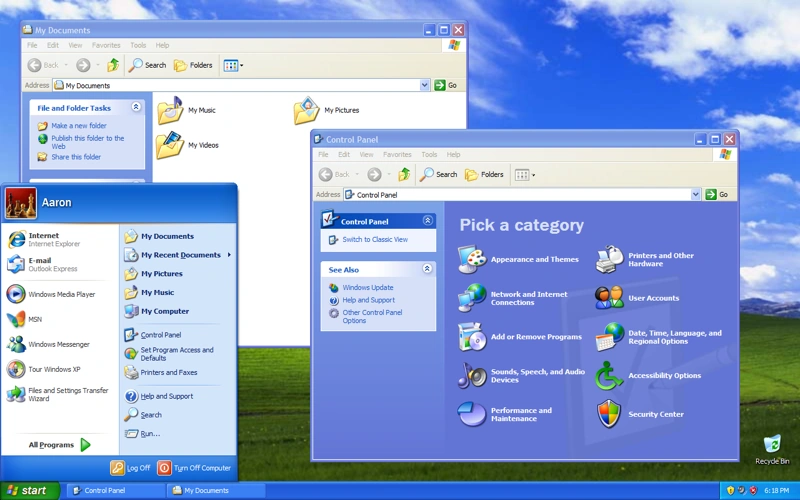

Windows XP desktop
- Main articles: Windows XP and Features new to Windows XP
On 25 August 2001, Microsoft released Windows XP (codenamed "Whistler"). The merging of the Windows NT/2000 and Windows 95/98/Me lines was finally achieved with Windows XP. Windows XP uses the Windows NT 5.1 kernel, marking the entrance of the Windows NT core to the consumer market, to replace the aging 16/32-bit branch. The initial release met with considerable criticism, particularly in the area of security, leading to the release of three major Service Packs. Windows XP SP1 was released in September 2002, SP2 came out in August 2004 and SP3 came out in April 2008. Service Pack 2 provided significant improvements and encouraged widespread adoption of XP among both home and business users. Windows XP lasted longer as Microsoft's flagship operating system than any other version of Windows, from 25 October 2001 to 30 January 2007 when it was succeeded by Windows Vista.
Windows XP is available in a number of versions:
- Windows XP Home Edition, for home desktops and laptops - lacked features such as joining Active Directory Domain, Remote Desktop Server and Internet Information Services Server.
- Windows XP Home Edition N, as above, but without a default installation of Windows Media Player, as mandated by a European Union ruling
- Windows XP Professional, for business and power users contained all features in Home Edition.
- Windows XP Professional N, as above, but without a default installation of Windows Media Player, as mandated by a European Union ruling
- Windows XP Media Center Edition (MCE), released in October 2002 for desktops and notebooks with an emphasis on home entertainment. Contained all features offered in Windows XP Professional and the Windows Media Center. Subsequent versions are the same but have an updated Windows Media Center.
- Windows XP Media Center Edition 2003
- Windows XP Media Center Edition 2004
- Windows XP Media Center Edition 2005, released on 12 October 2004. Included Windows XP Service Pack 2, the Royale Windows Theme and joining a Windows Active Directory Domain is disabled.
- Windows XP Tablet PC Edition, for tablet PCs
- Windows XP Tablet PC Edition 2005
- Windows XP Embedded, for embedded systems
- Windows XP Starter Edition, for new computer users in developing countries
- Windows XP Professional x64 Edition, released on 25 April 2005 for home and workstation systems utilizing 64-bit processors based on the x86-64 instruction set developed by AMD as AMD64; Intel calls their version Intel 64
- Windows XP 64-bit Edition, is a version for Intel's Itanium line of processors; maintains 32-bit compatibility solely through a software emulator. It is roughly analogous to Windows XP Professional in features. It was discontinued in September 2005 when the last vendor of Itanium workstations stopped shipping Itanium systems marketed as "Workstations".
- Windows XP 64-bit Edition 2003, based on the Windows NT 5.2 codebase.
Windows Server 2003
- Main article: Windows Server 2003
On 25 April 2003 Microsoft launched Windows Server 2003, a notable update to Windows 2000 Server encompassing many new security features, a new "Manage Your Server" wizard that simplifies configuring a machine for specific roles, and improved performance. It has the version number NT 5.2. A few services not essential for server environments are disabled by default for stability reasons, most noticeable are the "Windows Audio" and "Themes" services; Users have to enable them manually to get sound or the "Luna" look as per Windows XP. The hardware acceleration for display is also turned off by default, users have to turn the acceleration level up themselves if they trust the display card driver.
December 2005, Microsoft released Windows Server 2003 R2, which is actually Windows Server 2003 with SP1 (Service Pack 1) plus an add-on package. Among the new features are a number of management features for branch offices, file serving, printing and company-wide identity integration.
Windows Server 2003 is available in six editions:
- Web Edition (32-bit)
- Standard Edition (32 and 64-bit)
- Enterprise Edition (32 and 64-bit)
- Datacenter Edition (32 and 64-bit)
- Small Business Server (32-bit)
- Storage Server (OEM channel only)
Windows XP x64 and Server 2003 x64 Editions
- Main article: Windows XP Professional x64 Edition
On 25 April 2005, Microsoft released Windows XP Professional x64 Edition and Windows Server 2003, x64 Editions in Standard, Enterprise and Datacenter SKUs. Windows XP Professional x64 Edition is an edition of Windows XP for x86-64 personal computers. It is designed to use the expanded 64-bit memory address space provided by the x86-64 architecture.
Windows XP Professional x64 Edition is based on the Windows Server 2003 codebase; with the server features removed and client features added. Both Windows Server 2003 x64 and Windows XP Professional x64 Edition use identical kernels.
Windows XP Professional x64 Edition is not to be confused with Windows XP 64-bit Edition, as the latter was designed for Intel Itanium processors. During the initial development phases, Windows XP Professional x64 Edition was named Windows XP 64-Bit Edition for 64-Bit Extended Systems.
Windows Server 2003 R2
- Main article: Windows Server 2003#Windows Server 2003 R2
Windows Server 2003 R2, an update of Windows Server 2003, was released to manufacturing on 6 December 2005. It is distributed on two CDs, with one CD being the Windows Server 2003 SP1 CD. The other CD adds many optionally installable features for Windows Server 2003. The R2 update was released for all x86 and x64 versions. Windows Server 2003 R2 Enterprise Edition was not released for Itanium.
Windows Fundamentals for Legacy PCs
- Main article: Windows Fundamentals for Legacy PCs
In July 2006, Microsoft released a thin-client version of Windows XP Service Pack 2, called Windows Fundamentals for Legacy PCs (WinFLP). It is only available to Software Assurance customers. The aim of WinFLP is to give companies a viable upgrade option for older PCs that are running Windows 95, 98, and Me that will be supported with patches and updates for the next several years. Most user applications will typically be run on a remote machine using Terminal Services or Citrix.
Windows Home Server
- Main article: Windows Home Server
Windows Home Server (codenamed Q, Quattro) is a server product based on Windows Server 2003, designed for consumer use. The system was announced on 7 January 2007 by Bill Gates. Windows Home Server can be configured and monitored using a console program that can be installed on a client PC. Such features as Media Sharing, local and remote drive backup and file duplication are all listed as features.
Windows Vista
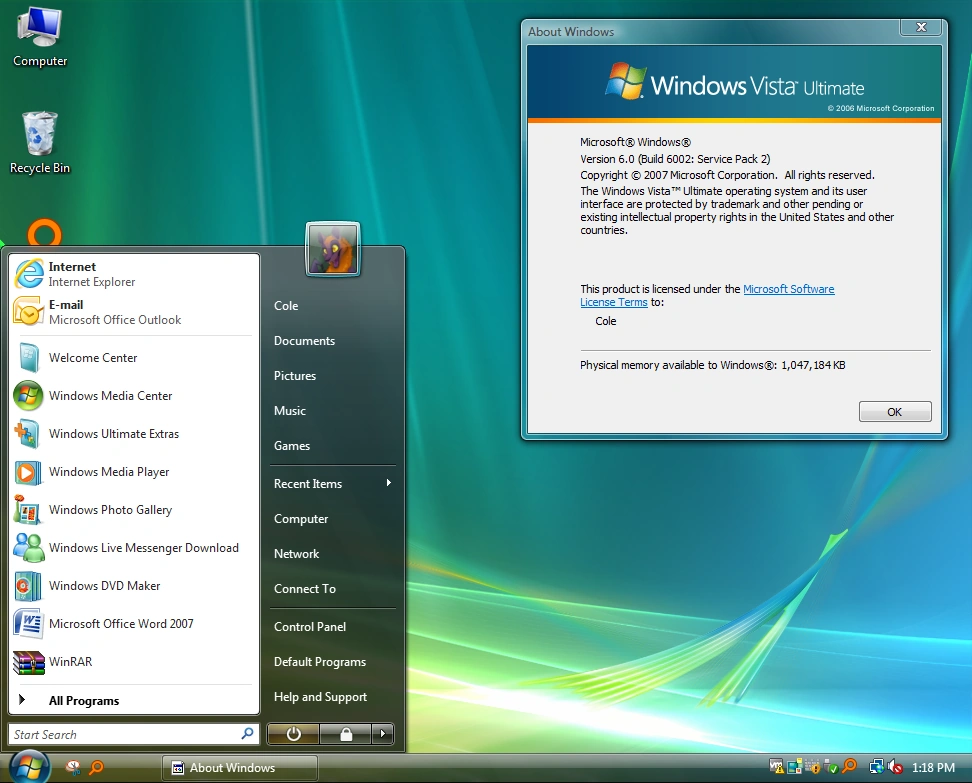

Windows Vista Desktop
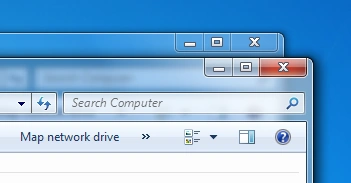

Windows Vista has the Aero theme
- Main articles: Windows Vista, Features new to Windows Vista, Development of Windows Vista, Criticisms of Windows Vista, and List of features removed in Windows Vista
Windows Vista was released on 8 November 2006 to business customers, consumer versions following on 30 January 2007. Windows Vista intended to have enhanced security by introducing a new restricted user mode called User Account Control, replacing the "administrator-by-default" philosophy of Windows XP. One major difference between Vista and earlier versions of Windows, Windows 95 and later, is that the original start button was replaced with just the Windows icon. Vista also features new graphics features, the Windows Aero GUI, new applications (such as Windows Calendar, Windows DVD Maker and some new games including Chess, Mahjong, and Purble Place), Internet Explorer 7, Windows Media Player 11, and a large number of underlying architectural changes. Windows Vista has the version number NT 6.0.
Windows Vista ships in six editions:
- Starter (only available in developing countries)
- Home Basic
- Home Premium
- Business
- Enterprise (only available to large business and enterprise)
- Ultimate (combines both Home Premium and Enterprise)
All editions (except Starter edition) are currently available in both 32-bit and 64-bit versions. The biggest advantage of the 64-bit version is breaking the 4 gigabyte memory barrier, which 32-bit computers cannot fully access.
Windows Server 2008
- Main article: Windows Server 2008
Windows Server 2008, released on 27 February 2008, was originally known as Windows Server Codename "Longhorn". Windows Server 2008 builds on the technological and security advances first introduced with Windows Vista, and is significantly more modular than its predecessor, Windows Server 2003.
Windows Server 2008 ships in ten editions:
- Windows Server 2008 Standard Edition (32-bit and 64-bit)
- Windows Server 2008 Enterprise Edition (32-bit and 64-bit)
- Windows Server 2008 Datacenter Edition (32-bit and 64-bit)
- Windows HPC Server 2008
- Windows Web Server 2008 (32-bit and 64-bit)
- Windows Storage Server 2008 (32-bit and 64-bit)
- Windows Small Business Server 2008 (64-bit only)
- Windows Essential Business Server 2008 (32-bit and 64-bit)
- Windows Server 2008 for Itanium-based Systems
- Windows Server 2008 Foundation Server
Windows 7 and Windows Server 2008 R2
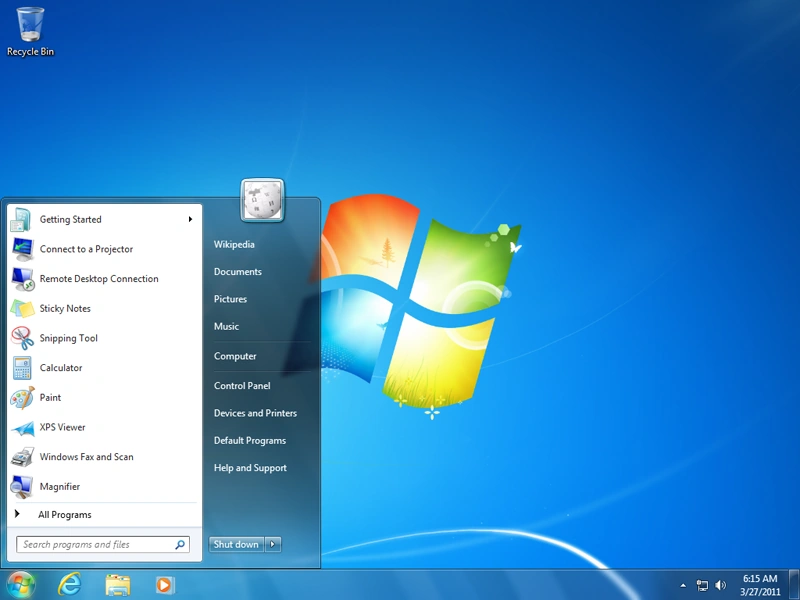

Windows 7 Desktop
Windows 7 was released to manufacturing on July 22, 2009 and reached general retail availability on October 22, 2009. Since its release, Windows 7 had one service pack.
Some features of Windows 7 were faster booting, Device Stage, Windows PowerShell, less obtrusive User Account Control, multi-touch, and improved window management. Features included with Windows Vista and not in Windows 7 include the sidebar (although gadgets remain) and several programs that were removed in favor of downloading their Windows Live counterparts. Windows 7 was met with positive reviews, which said the OS was faster nad easier to use than Windows Vista.
Windows 7 ships in six editions:
- Starter (available worldwide)
- Home Basic
- Home Premium
- Professional
- Enterprise (available to volume-license business customers only)
- Ultimate (available to retail market with limited availability to OEMs)
In some countries in the European Union, there were other editions that lack some features such as Windows Media Player, Windows Media Center and Internet Explorer – these editions were called names such as "Windows 7 N." Microsoft focuses on selling Windows 7 Home Premium and Professional. All editions, except the Starter edition, were available in both 32-bit and 64-bit versions.
Unlike the corresponding Vista editions, the Professional and Enterprise editions are supersets of the Home Premium edition.
At the Professional Developers Conference (PDC) 2008, Microsoft also announced Windows Server 2008 R2, as the server variant of Windows 7. Windows Server 2008 R2 shipped in 64-bit versions (x64 and Itanium) only.
Windows Home Server 2011
- Main article: Windows Home Server 2011
Windows Home Server 2011 code named 'Vail' was released on 6 April 2011. Windows Home Server 2011 is built on the Windows Server 2008 R2 code base It follows the release of Windows Home Server Power Pack 3 which added support for Windows 7 to Windows Home Server. Windows Home Server 2011 is considered a "major release". (its predecessor having been built on Windows Server 2003) and only supports x86-64 hardware.
Windows Thin PC
- Main article: Windows Thin PC
In 2011, Microsoft introduced Windows Thin PC or WinTPC, which is a feature- and size-reduced locked-down version of Windows 7 expressly designed to turn older PCs into thin clients. WinTPC is available for software assurance customers and relies on cloud computing in a business network. Wireless operation is supported since WinTPC has full wireless stack integration, but wireless operation may not be as good as the operation on a wired connection.
Windows 8 and Windows Server 2012
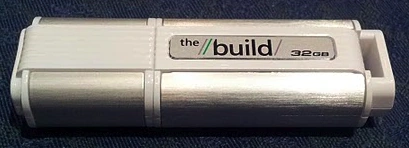

Bootable Windows To Go USB flash drive, upcoming Windows 8 feature
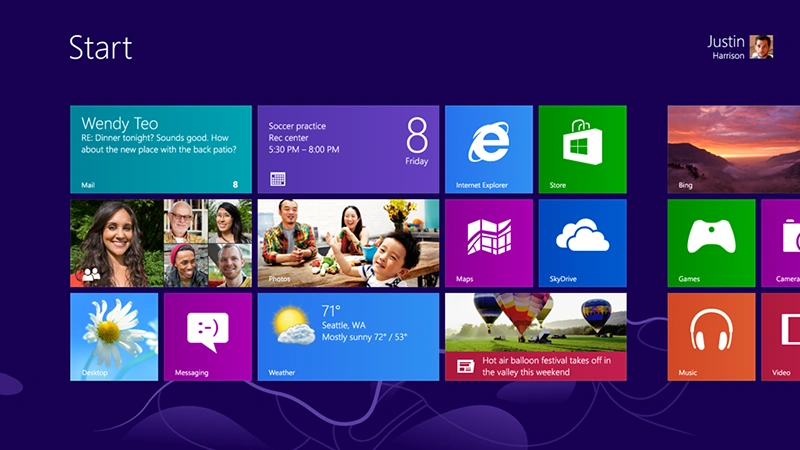

Screenshot of the new Windows 8 Start Screen
Windows 8 was previewed by Microsoft on June 1, 2011 at both Computex Taipei and the D9: All Things Digital conference in California. The first public preview of Windows Server 2012 was shown by Microsoft at the 2011 Microsoft Worldwide Partner Conference. Windows 8 Release Preview and Windows Server 2012 Release Candidate were both released on May 31, 2012. Product development on Windows 8 was completed on August 1, 2012, and it was released to manufacturing the same day. Windows Server 2012 went on sale to the public on September 4, 2012. Windows 8 went on sale to the public on October 26, 2012. One edition, Windows RT, runs on some system-on-a-chip devices with mobile 32-bit ARM (ARMv7) processors. Windows 8 features a redesigned user interface, designed to make it easier for touchscreen users to use Windows. The interface introduced an updated Start menu known as the Start screen, and a new full-screen application platform. The desktop interface is also present for running windowed applications, although Windows RT will not run any desktop applications not included in the system. On the Building Windows 8 blog, it was announced that a computer running Windows 8 can boot up much faster than Windows 7. New features also include USB 3.0 support, the Windows Store, the ability to run from USB drives with Windows To Go, and others.
Windows 8.1 and Windows Server 2012 R2 were released on October 17, 2013. Windows 8.1 is available as an update in the Windows Store for Windows 8 users only and also available to download for clean installation. The update adds new options for resizing the live tiles on the Start screen. Windows 8 was given the kernel number NT 6.2, with its successor 8.1 receiving the kernel number NT 6.3. Both versions received some criticism due to the removal of the Start menu and some difficulties to perform tasks and commands.
Windows 8 is available in the following editions:
- Windows 8
- Windows 8 Pro
- Windows 8 Enterprise
- Windows RT
Product progression
Original line
- Windows 1.0
- Windows 2.0
- Windows 2.1 (Windows/286 and Windows/386)
- Windows 3.0
- Windows 3.1 (with a respective Windows for Workgroups release)
- Windows 3.11 (also with a respective Windows for Workgroups release)
- Windows 3.2 (a minor update to 3.1 for Simplified Chinese support)
Windows 9x
- Windows 95 (version 4.0)
- Windows 98 and Windows 98 SE (version 4.1)
- Windows Me (version 4.9)
Windows NT
- Windows NT 3.1
- Windows NT 3.5
- Windows NT 3.51
- Windows NT 4.0
- Windows 2000 (NT version 5.0)
- Windows XP and Windows Fundamentals for Legacy PCs (NT version 5.1)
- Windows Server 2003 and Windows XP Professional x64 Edition (NT version 5.2)
- Windows Vista and Windows Server 2008 (NT version 6.0)
- Windows 7 and Windows Server 2008 R2 (NT version 6.1)
- Windows 8 and Windows Server 2012 (NT version 6.2)
- Windows 8.1 (NT version 6.3)
- Windows 10 (NT version 10.0.1xxxx)
- Windows 10X (cancelled)
- Windows 11 (NT version 10.0.2xxxx)
See also
- Microsoft Windows
- Windows Versions
- Comparison of operating systems
- Microsoft codenames
- Microsoft version numbering
External links
- A history of Windows (1975-2015) at Microsoft (archived 2016-06-18)
- Windows Version History (1.x-3.11) at Microsoft (archived 2005-05-25)
- Microsoft History (1975-1995) at Microsoft Library (archived 1996-10-17)
- Windows at GUIdebook Graphical User Interface Gallery
- Microsoft Windows history at Computer Hope
- Microsoft Windows version history at Wikipedia
 |
Wikipedia (article: Microsoft Windows version history)
|
|---|
Microsoft Windows family
|
|---|
| Versions • Components • History |
| Original |
| DOS-based |
| Windows 1.0 • Windows 2.0 • Windows 2.1 (Windows/286 • Windows/386) • Windows 3.0 • Windows 3.1 |
| Windows 9x |
| Windows 95 • Windows 98 • Windows Me |
| Windows NT |
| Early versions |
| Windows NT 3.1 • Windows NT 3.5 • Windows NT 3.51 • Windows NT 4.0 • Windows 2000 |
| Client |
| Windows XP (development) • Windows Vista (editions • development) • Windows 7 (editions • development) • Windows 8 • Windows 10 • Windows 11 |
| Windows Server |
| Server 2003 • Server 2008 (2008 R2) • HPC Server 2008 • Home Server • Small Business Server • Essential Business Server • Windows Server 2012 • Windows Server 2016 • Windows Server 2019 • Windows Server 2022 |
| Specialized |
| Windows Embedded • Windows PE • Windows Fundamentals for Legacy PCs |
| Mobile |
| Windows Mobile • Windows Phone |
| Cancelled |
| Cairo • Nashville • Neptune • Odyssey • Windows 10X |
| Related |
| Metro • Midori • OS/2 • Windows Aero • Windows Setup • Windows XP themes • Microsoft Plus! |